168K subscribers
1,912 views·
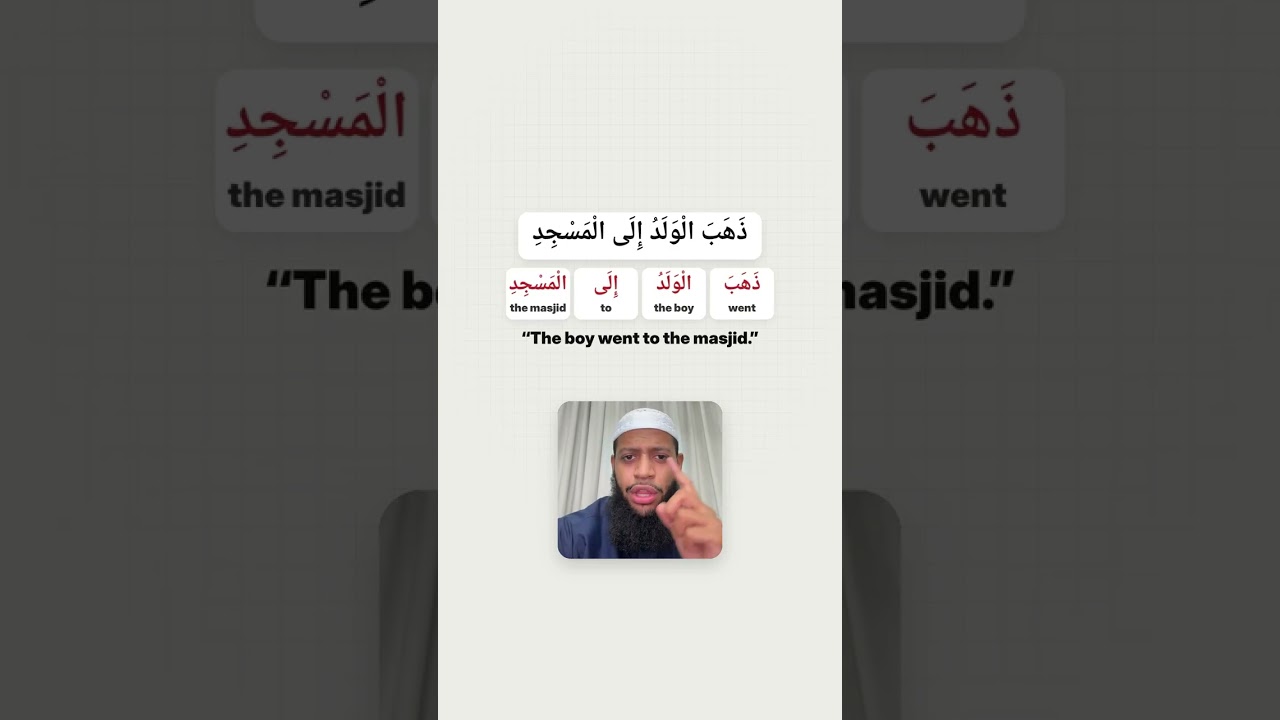
Here is the breakdown of these three expressions. Level 1 "What is this?" ما هذا؟ Mā hādhā? Word by word: ما (mā) → what هذا (hādhā) → this ما is a question particle. It opens inquiry. هذا is a demonstrative pronoun pointing to something near and masculine. Together they form one of the first questions a learner asks: What is this? Level 2 "What is this that you see now?" ما هذا الذي تراه الآن؟ Mā hādhā alladhī tarāhu al'ān? Word by word: ما (mā) → what هذا (hādhā) → this الذي (alladhī) → that which / which تراه (tarāhu) → you see it الآن (al'ān) → now الذي is a relative pronoun connecting هذا to the verb that follows. It turns a simple "this" into "this which you see." The ه in تراه is a pronoun suffix meaning "it," referring back to the thing being seen. Level 3 "What is this, O student?" ما هذا يا أيها الطالب؟ Mā hādhā yā ayyuhā aṭ-ṭālib? Word by word: ما (mā) → what هذا (hādhā) → this يا (yā) → O (vocative particle) أيها (ayyuhā) → used for calling / addressing someone الطالب (aṭ-ṭālib) → the student يا أيها is the classical structure for addressing someone respectfully. يا is the vocative particle. أيها adds emphasis and formality. الطالب comes from the root ط ل ب, meaning to seek or request. A student is literally someone who seeks knowledge. Watch this video to learn how to get fluent in Arabic: https://youtu.be/djyY0QYIoNU