168K subscribers
1,758 views·
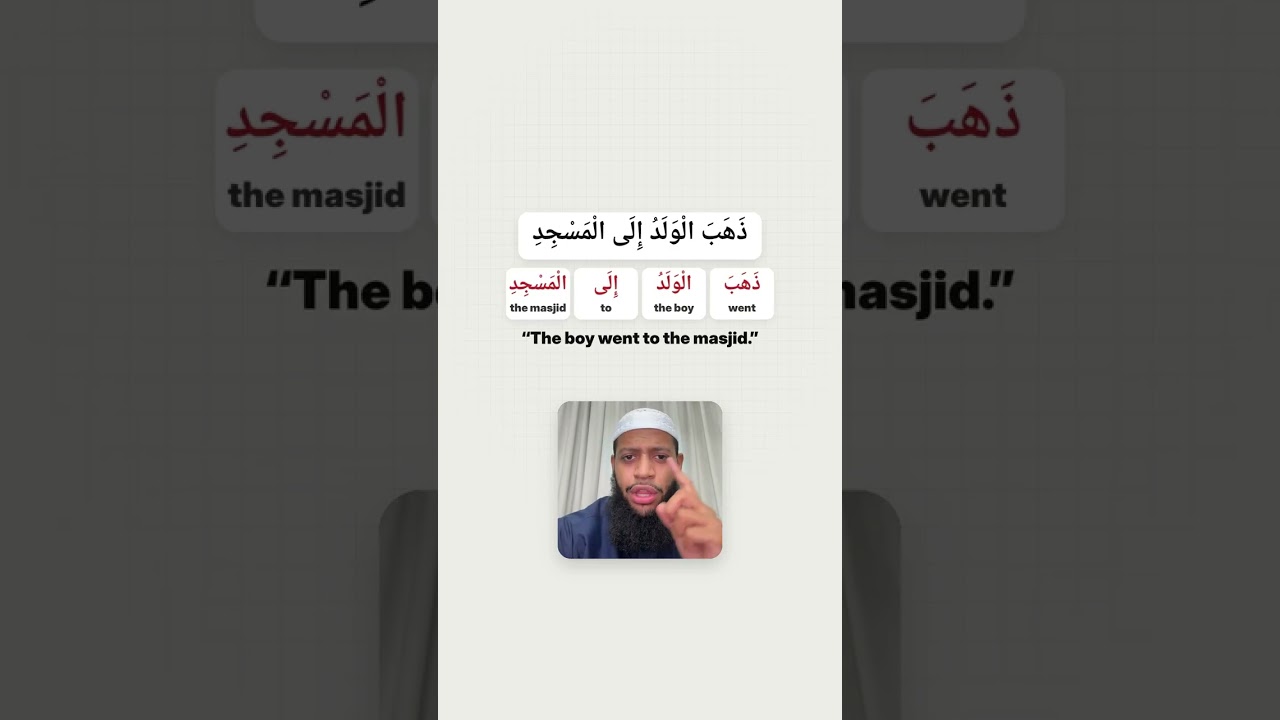
Here is the breakdown of these three expressions. Level 1 "What is this?" ما هٰذا؟ Mā hādhā? Word by word: ما (mā) → what هٰذا (hādhā) → this ما is one of the most common question words in the Quran. It asks for identity or description. هٰذا points directly at something close to you. This is the simplest way to ask about the world around you in Arabic. Level 2 "This is bread." هٰذا خُبْزٌ Hādhā khubzun Word by word: هٰذا (hādhā) → this خُبْزٌ (khubzun) → bread There is no verb "is" written. In Arabic, you say: This bread. The tanween at the end (the ـٌ sound) marks it as indefinite. It also shows the word is in the nominative case because it is the subject. Arabic builds meaning through structure, not extra words. Level 3 "I love cheese." أُحِبُّ الْجُبْنَ Uḥibbu al-jubna Word by word: أُحِبُّ (uḥibbu) → I love الْجُبْنَ (al-jubna) → the cheese The verb أُحِبُّ comes from the root ح ب ب meaning to love, to cherish. The prefix أُ shows first person: I. الْجُبْنَ ends with fatḥah because it is the direct object of the verb. This is called naṣb. Even simple sentences follow precise grammatical rules in Quranic Arabic. Watch this video to learn how to get fluent in Arabic: https://youtu.be/djyY0QYIoNU