11.8K subscribers
2,828 views·
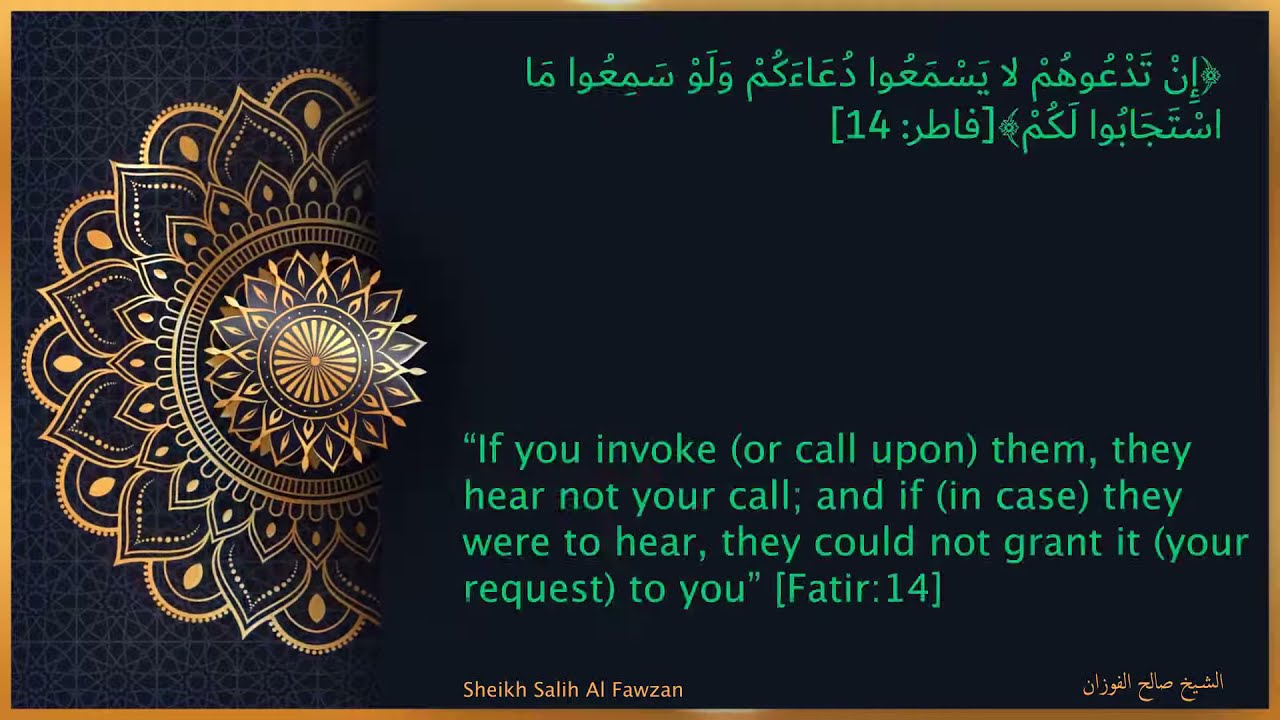
📌 In this beneficial and important clarification, Shaykh Salih al-Fawzan explains the ruling on seeking intercession (shafaah) from both the dead and the living. The Shaykh affirms that seeking intercession from the creation is shirk akbar, whether the request is directed to a dead person or a living person. Intercession belongs entirely to Allah and is not sought from the creation. Rather, it is sought from Allah alone, just as a person asks Him for steadfastness upon the religion and for death upon iman. The Shaykh further clarifies that merely conditioning the request by saying, "If Allah permits you," does not alter the ruling. This is because intercession belongs to Allah alone and cannot be requested from the creation. Rather, one asks Allah to grant intercession, not the created being itself. "Say: To Allah belongs all intercession. To Him belongs the dominion of the heavens and the earth." [Surah Az Zumar 39:44] Source of quote: https://shamela.ws/book/7597/254 ━━━━━━━━━━━━━━━━━━━━━━ ⚠️ Examples of Shirk in Seeking Intercession: ❌ Asking a memorizer of the Quran to intercede for you on the Day of Judgment. ❌ Asking a fighter in the path of Allah, before he goes out to battle, to intercede for you on the Day of Judgment if he is martyred. ❌ Asking a martyr who fought in the path of Allah to intercede for you on the Day of Judgment. ❌ Asking the Prophet Muhammad ﷺ to intercede for you on the Day of Judgment. ❌ Asking a righteous scholar to intercede for you on the Day of Judgment. ❌ Asking an angel to intercede for you on the Day of Judgment. ━━━━━━━━━━━━━━━━━━━━━━ ✅ Correct Examples of Seeking Intercession: This request should be directed to Allah alone. Rather, one should ask Allah to permit them to intercede on his behalf, such as: ✅ "O Allah, allow the Prophet Muhammad ﷺ to intercede for me." ✅ "O Allah, allow the martyrs to intercede for me." ✅ "O Allah, allow the righteous believers to intercede for me." ✅ "O Allah, grant me the intercession of those whom You permit to intercede on the Day of Judgment." ━━━━━━━━━━━━━━━━━━━━━━ ⚠️ The Murji'ah conflate the outward rulings pertaining to legislative names and labels with the inward rulings pertaining to legislative punishments. - The outward ruling is the worldly judgment based solely on a person’s outward statements and actions. It does not depend on what is in the heart. - The inward ruling concerns the hidden reality of the heart, which cannot be known. It is only considered in matters of punishment and the ruling of the Hereafter. Ignorance, coercion, mistake, and denial are considered here, not in the outward ruling. ✍ The Permanent Committee for Islamic Research and Fatwas in Saudi Arabia. Fatwah no. 4400: 👉 (❗) "So clarifying the matter and establishing the proof (Iqāmat al-hujjah) is for the purpose of removing any excuse before carrying out the PUNISHMENT upon him, NOT in order for him to be called a kafir only after the clarification. 👉 (❗) Rather, he IS CALLED a kafir based on the outward act he committed. Such as prostrating to other than Allah, vowing as an act of worship to other than Him, or slaughtering an animal, like a sheep, for other than Allah.” 📚 Source: Kitāb Fatāwā al-Lajnah al-Dāʾimah –First Collection, vol. 1, p. 220 https://shamela.ws/book/8381/396#p1 ━━━━━━━━━━━━━━━━━━━━━━ ✅ The methodology of Ahl al-Sunnah wal-Jamaah: The outward ruling is based exclusively on statements and actions. ✍️ Al-Hafidh Ibn Hajar al-Asqalani (d. 852H) in Fath al-Bari (12/272), transmitting consensus: وكلهم أجمعوا على أن أحكام الدنيا على الظاهر، والله يتولى السرائر “THEY ALL UNANIMOUSLY AGREED that worldly rulings are based upon what is outwardly apparent, while Allah alone takes charge of what lies within.” End Quote ✍️ Shaykh al-Islam Ibn Taymiyyah (d. 728H) said in As-Sarim al-Maslul (2/339): فمن قال أو فعل ما هو كفر, كفر بذلك، وإن لم يقصد أن يكون كافرًا، إذ لا بقصد الكفر أحدّ إلًّا ما شاء الله. “Whoever says or does t